A support worker notices that someone she looks after has gone quiet. The person used to chat at breakfast, but this week they are skipping meals and staying in their room. She is not sure if it is a bad few days or something more. She does not want to say the wrong thing, and she does not want to ignore it either. Moments like this are exactly why care employers ask their staff to complete this kind of course.
What Is Mental Health Awareness Training?
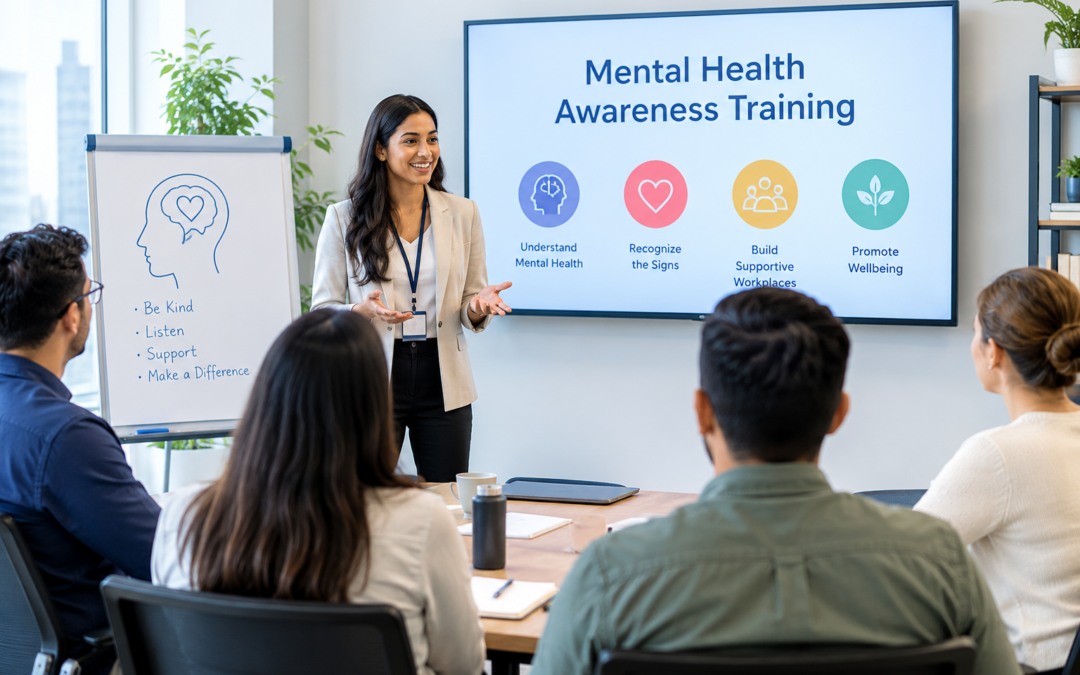
Mental health awareness training is a course that helps people working in care understand mental health, spot early signs that someone is struggling, and respond in a calm and safe way. It is not about diagnosing anyone. It is about knowing what you are seeing, knowing how to talk about it, and knowing when to ask for help.
The course is built for people who work close to others every day, such as care staff, healthcare assistants, and new carers.
What Will You Learn?
Exact content depends on the provider, but a good course usually covers a few core areas.
You learn about common mental health conditions, so the names and terms stop feeling unfamiliar. You learn to notice early signs of distress, such as changes in mood, sleep, appetite, or behaviour. You learn how to communicate safely with someone who is struggling, including what to say, what to avoid, and how to listen without rushing to fix things.
Many courses also cover how to support someone in a crisis, how to reduce stigma, and the legal and ethical points that apply in care. And a good one reminds carers to look after their own wellbeing, because supporting others can be tiring.
A Real Situation Where It Helps
Go back to the support worker at breakfast. Without training, she might decide the person is just in a mood and leave it. With training, she is more likely to notice that several things have changed at once. She might sit down, ask a gentle open question, and listen. Then she records what she saw and tells the right person.
None of this is dramatic. It is a small act of noticing and following the right steps. That is often what makes the difference between a problem that grows quietly and one that gets support early.
Who Should Take This Course
This course suits anyone who works with people who may be experiencing mental health difficulties. That includes care home staff, home carers, healthcare assistants, and people new to the sector. You do not need previous experience, so it works for people just starting out as well as for those who want a refresher.
Many employers also ask staff to complete it as part of their training requirements, so it is worth checking what yours expects.
About Shreeji Training
Shreeji Training is based at the CEME Campus in Rainham, Essex, and provides short courses, clinical skills training, and mandatory training for health and social care staff. Learners can choose from online, in-person, or blended sessions, and the team can also deliver training on site at a care provider’s premises. Courses are written in plain language and built around real care situations, so staff can use what they learn straight away.
Choosing Mental Health Training
When you compare mental health training options, look closely at what each course covers and how it is delivered. Ask whether it includes practical examples, whether it covers crisis situations, and whether learners receive a certificate afterwards.
It also helps to ask about format. Some staff prefer a live session where they can ask questions, while others need an online course that fits around shifts. A provider that offers several formats makes this easier.
Mental Health Training in the UK
Care employers across the country look for mental health training UK courses that are recognised and relevant to their sector. If you manage a team, check what your regulator and your own policies expect, and ask each provider about their accreditation and what the certificate shows.
It is better to ask these questions early than to find out later that a course does not meet your employer’s requirements.
Mental Health Training in London
Care teams in the capital often work different shifts across several sites, so finding one date that suits everyone is hard. Many managers look for mental health training London that can run at a training centre, on site, or online, so the whole team can complete it without leaving a service short-staffed.
Group sessions have another benefit. Staff share real examples from their own workplace, and the team ends up with the same shared language.
Training That Works Alongside Other Courses
This course fits with other training your staff may already have. For example, safeguarding adults training covers how to protect people from harm and abuse, and it pairs naturally with what you learn about spotting distress. Together they give care teams a clearer view of what to notice and what to do next.
Setting Realistic Expectations
One course will not turn anyone into a mental health professional, and it should not be treated as a box to tick. What it gives you is a foundation, which is the awareness to notice, the words to use, and the confidence to ask for help. The real learning happens when you use it on shift and keep talking with colleagues about what you see.
FAQs
1. What is mental health awareness training?
It is a course that helps care staff understand mental health, recognise early signs of distress, and respond safely and confidently.
2. Who should take mental health awareness training?
Care staff, healthcare assistants, new carers, and anyone working with people who may have mental health needs. Your employer can tell you if it is required for your role.
3. Do I need experience before I start?
No. The course suits both people who are new to care and those who want to refresh what they know.
4. What topics does the course cover?
Usually common mental health conditions, early warning signs, supporting someone in crisis, safe communication, reducing stigma, and the legal and ethical points that apply in care.
5. Can I take the course online?
Many providers offer online, in-person, or blended sessions. Ask which formats are available before you book.
6. Will I get a certificate?
Providers normally issue a certificate that you can keep in your training record and show to your employer. Confirm this with the provider.
Get in Touch
If you are looking for mental health training for yourself or your care team, it is worth asking about content and format before you book.
Shreeji Training
Website: https://shreejitraining.com
Email:
Phone: