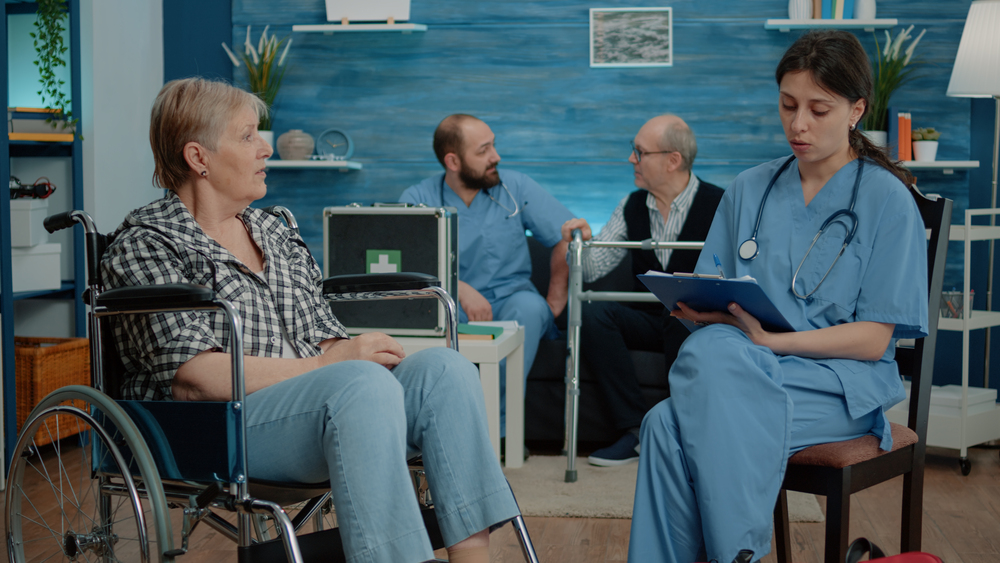
Not everyone who works in care starts with a qualification. Many begin with compassion, patience, and a willingness to help. But sooner or later, a question comes up – how do you move forward from here?
That’s where a Diploma in Health and Social Care makes a real difference. It’s not just a certificate to frame on the wall. It’s a structured way to understand how care actually works in the UK – legally, ethically, and practically.
If you’ve ever felt unsure during a challenging situation, or wondered whether you’re doing things the “right” way, you’re not alone. A Level 3 Health and Social Care Diploma gives you that clarity. And in a sector like Health and social care, clarity is everything.
A Foot In The Door – And A Way Forward
Let’s be honest. The care sector is always hiring – but not everyone gets promoted.
Employers look for people who can do more than follow instructions. They want staff who understand safeguarding, care planning, and risk management. A Diploma in Health and Social Care signals that you’re serious about your role.
In practice, this can mean:
- Moving from support roles into senior care positions
- Taking on more responsibility in care planning
- Being trusted with complex cases
And yes, in many cases, it leads to better pay and job stability. The UK care sector continues to grow, and qualified professionals are in demand.
Learning That Actually Applies On The Job
Here’s something people don’t always realise – this isn’t purely academic learning.
A Level 3 Health and Social Care Diploma focuses heavily on real-world application. You’re not just reading about care; you’re applying it in your daily work.
You might find yourself:
- Handling a safeguarding concern with more confidence
- Communicating more effectively with families
- Supporting individuals with dementia using structured approaches
That shift – from “guessing” to “knowing” – is where the value sits. In Health and social care, small decisions can have big consequences. Training helps you make the right ones.
Flexibility That Fits Around Real Life
Most people in care don’t have the luxury of stopping work to study. And they shouldn’t have to.
Many Diploma in Health and Social Care programmes are designed with working professionals in mind. That means:
- Online or blended learning options
- Flexible assessment schedules
- Learning that integrates with your current role
It’s not about adding pressure. It’s about building skills alongside your day-to-day work.
And for many, this is what makes the Level 3 Health and Social Care Diploma achievable.
A Reality Check: It’s Not “Just Care Work”
There’s a common misconception that care roles are purely practical – helping with daily tasks, following routines, and supporting basic needs.
That’s only part of the picture.
Modern Health and social care requires:
- Understanding legal frameworks and duty of care
- Recognising signs of abuse or neglect
- Managing risk in unpredictable situations
Without proper training, it’s easy to feel out of depth. A Diploma in Health and Social Care addresses this directly. It builds professional awareness, not just practical ability.
In short, it turns a job into a career.
Stronger Career Pathways (And More Options Than You Think)
Once you complete a Level 3 Health and Social Care Diploma, new doors open.
You’re not limited to one role. You could move into:
- Senior care or supervisory positions
- Specialist areas like mental health or dementia care
- Further study, including Level 5 diplomas or degree pathways
And here’s a practical insight – employers often prioritise internal promotions. If you’re already working in care and gain a recognised qualification, you’re in a strong position.
Staying Compliant, Safe, And Professional
Care is heavily regulated in the UK – and for good reason. Mistakes can have serious consequences.
A structured Diploma in Health and Social Care helps you understand:
- Current UK care standards and expectations
- Safe handling and infection control practices
- Accurate reporting and documentation
It also supports safer environments overall. For example, in settings where drug testing kits are used as part of safeguarding or workplace safety protocols, trained staff are better equipped to follow procedures correctly and responsibly.
Conclusion
Care work is rewarding – but it’s also demanding. Without the right training, it’s easy to feel stuck or uncertain. A structured qualification changes that. It builds confidence, improves decision-making, and opens up real career opportunities.
A Diploma in Health and Social Care gives you more than knowledge. It gives you direction. Whether you’re starting out or looking to progress, it’s a step that pays off in both skill and stability.
If you’re ready to take your role seriously and move forward with confidence, explore your options and connect with Shreeji Training to get started today.
FAQs
Q1: What Is A Level 3 Health And Social Care Diploma Equivalent To?
A: It is equivalent to A-level study in the UK and prepares learners for professional roles or further education.
Q2: Can I Study While Working Full-Time?
A: Yes, most Diploma in Health and Social Care courses offer flexible or online learning options to suit working professionals.
Q3: Do I Need Experience Before Enrolling?
A: Basic experience in care helps, but many courses are designed to support both new learners and existing workers.
Q4: What Jobs Can I Get After Completing The Diploma?
A: Common roles include care assistant, support worker, and progression into senior or specialist care positions.
Q5: Is The Health And Social Care Sector Stable In The UK?
A: Yes, demand remains high due to an ageing population, making it a stable and growing career sector.