Why Do Healthcare Workers Need Basic Life Support and First Aid Training?
Working in healthcare or social care involves more than providing everyday assistance. Carers and support workers may encounter unexpected situations such as breathing difficulties, choking, falls, bleeding or sudden loss of consciousness. Without appropriate training, even experienced care professionals may feel uncertain about what action to take first. Basic Life Support Training helps individuals understand how to recognise life threatening situations and provide immediate assistance until further medical help becomes available. Similarly, First Aid Training develops practical knowledge for dealing with common injuries and emergencies. These skills are particularly valuable in residential care homes, hospitals, domiciliary care services and community settings. For people working in London’s busy healthcare and social care sector, developing these abilities can support safer working practices and improve preparedness when emergencies occur.What Happens If You Do Not Know How to Respond During an Emergency?
One of the biggest concerns for care professionals is making the wrong decision during an emergency. When someone suddenly becomes unwell, hesitation can make an already stressful situation more difficult. There are several situations where first aid knowledge becomes essential.- Someone suddenly collapses
- A person stops breathing normally
- Someone experiences bleeding or burns
- A child experiences an emergency
- Someone is choking
What Will You Learn During Basic Life Support and First Aid Training?
Choosing the right First Aid and Basic Life Support Course means understanding what practical skills are covered. Shreeji Training provides training designed for caregivers, healthcare professionals and individuals who want to develop their emergency response knowledge. The training includes several important areas.1. CPR and Chest Compression Techniques
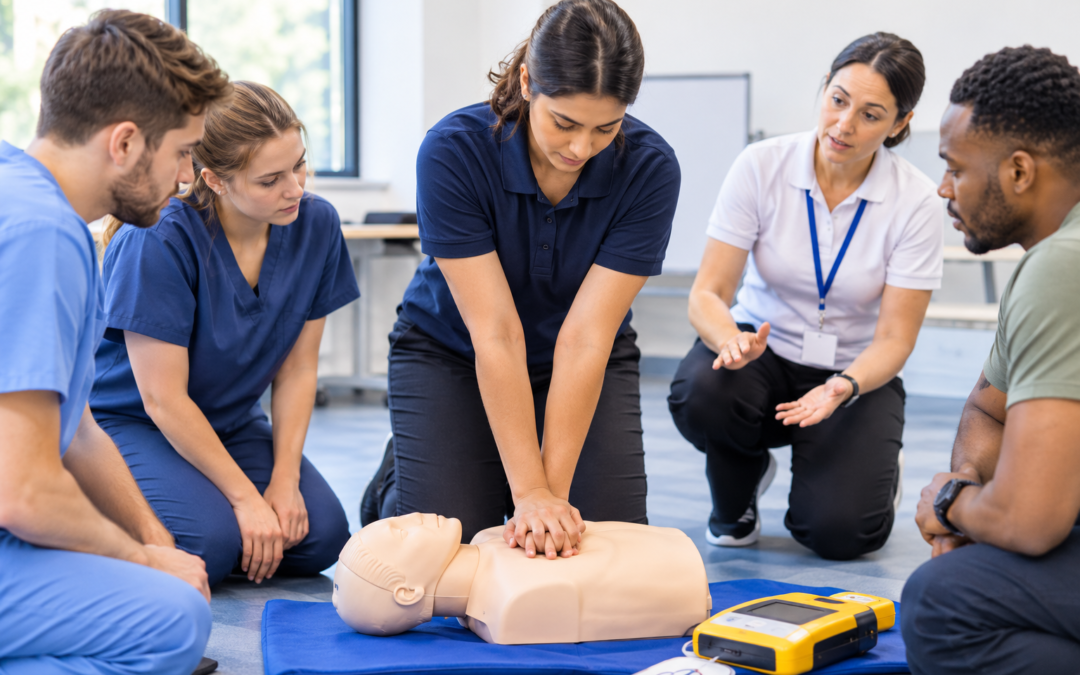
CPR Training teaches participants about chest compressions and rescue breaths, helping them understand the immediate response required when someone experiences cardiac arrest. Practical exercises using training manikins allow participants to practise the techniques under instructor guidance.2. Understanding AED Equipment
An automated external defibrillator, commonly known as an AED, is an important piece of emergency equipment. During AED Training, participants learn about its purpose, operation and role in responding to certain cardiac emergencies.3. Recovery and Positioning Skills
Understanding how to assist an unconscious person who is breathing normally is another important part of emergency preparation. Participants develop knowledge of appropriate recovery and positioning procedures.4. Managing Common Injuries
Emergency First Aid Training covers common situations such as:- Burns and scalds
- Bleeding and wounds
- Fractures
- Other everyday injuries
5. First Aid Equipment and Safety
Participants also become familiar with commonly used equipment, including bandages, gloves, portable first aid kits, antiseptics and AED training devices. Understanding how equipment is used can make responding to emergencies less intimidating.Why Practical Training Matters More Than Just Reading About First Aid
Have you ever read instructions about handling an emergency but wondered whether you could actually follow them when someone needed help? This is an important difference between knowing information and being able to apply it. Reading about CPR or watching demonstrations can introduce the basic principles, but practical experience helps participants understand the techniques more clearly. Shreeji Training incorporates interactive learning through manikins, equipment simulations and scenario based exercises. This approach allows participants to practise important skills in a controlled learning environment. The course also combines theoretical knowledge with practical activities, helping learners understand both the reasons behind emergency procedures and how to apply their learning. For people working in care environments, this practical experience can be especially valuable because emergencies may involve individuals with different health conditions and support requirements.Who Should Consider First Aid and Basic Life Support Training in London?
You do not need to work in a hospital to benefit from emergency response knowledge. First Aid Courses in London can be relevant to several professional groups, particularly those whose responsibilities involve supporting other people. These include:- Nurses and healthcare professionals who need to maintain practical emergency response knowledge.
- Care workers and support workers who assist individuals with daily living activities.
- Residential care home staff who support older people and vulnerable residents.
- Domiciliary care professionals who provide assistance in people’s homes.
- Community workers and volunteers who may encounter unexpected emergencies.
- Individuals who want to improve their personal understanding of first aid.
Why Choose Shreeji Training for Basic Life Support and First Aid Training?
Finding suitable training is not simply about obtaining a certificate. You also want to understand the skills being taught and whether the learning experience prepares you for real situations. Shreeji Training offers Basic Life Support and First Aid Training designed around the needs of caregivers, healthcare professionals and other individuals who require emergency response knowledge. Key features include:- Accredited Training: Courses are approved by relevant health and safety organisations, with certification provided upon successful completion.
- Experienced Instructors: Training is delivered by instructors with practical experience in healthcare or caregiving.
- Practical Learning: Participants develop their understanding through manikins, equipment demonstrations and simulated emergency scenarios.
- Flexible Learning: Classroom based practical sessions and blended learning options are available where appropriate.
- Relevant Skills: Training covers CPR, AED use, emergency response procedures and common first aid situations.
Frequently Asked Questions
1. What is the difference between Basic Life Support and First Aid Training?
Basic Life Support focuses on critical emergencies, including cardiac arrest, CPR and AED use. First Aid Training covers a wider range of situations, including burns, bleeding, choking and other injuries.2. Who can enrol in a Basic Life Support and First Aid Course?
The training is suitable for healthcare professionals, nurses, carers, support workers, residential care staff, community workers and individuals interested in developing emergency response skills.3. How long does Basic Life Support and First Aid Training take?
The duration depends on the selected course modules. A typical course may take one full day, while blended learning options may be delivered across multiple sessions. Contact Shreeji Training to confirm the duration of your chosen course.4. Will I receive a certificate after completing the training?
Yes. Shreeji Training states that participants receive an accredited certificate upon completing the course. The certificate and its recognition depend on the selected training programme and successful completion requirements.5. Does the course include practical CPR training?
Yes. Practical learning includes exercises using training manikins and equipment simulations to help participants understand CPR techniques and emergency response procedures.6. Is this training suitable for care home employees?
Yes. The course is suitable for residential care home employees, domiciliary care workers, nurses and support workers who want to develop their understanding of emergency situations.7. Can I learn how to use an AED during the course?
Yes. AED education is included in the training, helping participants understand how automated external defibrillators are used during certain cardiac emergencies.8. Why should I complete first aid training if I already work in healthcare?
Healthcare experience does not mean you will automatically feel confident handling every emergency. Training provides an opportunity to practise essential techniques, refresh your knowledge and understand appropriate emergency procedures. Get in Touch Get in touch with Shreeji Training today to find out more about available courses and enrolment options. Shreeji Training Website: https://shreejitraining.com Email: marketing@shreejitraining.com Phone: +44 (0) 208 596 5047
1. What is the difference between Basic Life Support and First Aid Training?
Basic Life Support focuses on critical emergencies, including cardiac arrest, CPR and AED use. First Aid Training covers a wider range of situations, including burns, bleeding, choking and other injuries.
2. Who can enrol in a Basic Life Support and First Aid Course?
The training is suitable for healthcare professionals, nurses, carers, support workers, residential care staff, community workers and individuals interested in developing emergency response skills.
3. How long does Basic Life Support and First Aid Training take?
The duration depends on the selected course modules. A typical course may take one full day, while blended learning options may be delivered across multiple sessions. Contact Shreeji Training to confirm the duration of your chosen course.
4. Will I receive a certificate after completing the training?
Yes. Shreeji Training states that participants receive an accredited certificate upon completing the course. The certificate and its recognition depend on the selected training programme and successful completion requirements.
5. Does the course include practical CPR training?
Yes. Practical learning includes exercises using training manikins and equipment simulations to help participants understand CPR techniques and emergency response procedures.
6. Is this training suitable for care home employees?
Yes. The course is suitable for residential care home employees, domiciliary care workers, nurses and support workers who want to develop their understanding of emergency situations.
7. Can I learn how to use an AED during the course?
Yes. AED education is included in the training, helping participants understand how automated external defibrillators are used during certain cardiac emergencies.
8. Why should I complete first aid training if I already work in healthcare?
Healthcare experience does not mean you will automatically feel confident handling every emergency. Training provides an opportunity to practise essential techniques, refresh your knowledge and understand appropriate emergency procedures.